Thursday, December 18, 2014

We need a little Christmas

In my house growing up, Christmas was and is a big deal. Beginning the morning after Thanksgiving my dad would go by a tree (sometimes my brother and I tagged along). My mother would start undecorating the fall decorations and begin the process of putting up the Christmas decorations. This was an all day project (and still is). That evening my siblings (and later siblings in-law) would gather and we decorate the tree while watching Lucille Ball in the musical movie adaption of MAME.

This is kind of an epic musical with great music and not great, but fun singing. Bea Arthur and Lucille Ball have a great duet called "Bosom Buddies."


Of course the reason this movie became a family tradition is the song "We Need a Little Christmas."


If you need a break from the crazy of the Holiday season give yourself 2.5 hours and watch this great classic, Have a great holiday season!

Monday, November 24, 2014

John Rutter's Gloria

John Rutter's Gloria will be a featured selection at the Lincoln Choral Artists' "With One Step...Peace" Holiday Concert on December 21, 3pm at O'Donnell Auditorium.
Concert Info

This is a popular and well know work for Choir, Brass, Organ, and Percussion. 

LCA will be programing the selection throughout the concert. Each movement (I. Gloria, II. Domine Deus, II. Cum Sancto Spiritu) will conclude a section of the concert. 

Below is some more great information on Rutter's Gloria which was originally premiered here in Nebraska over 40 years ago. It's exuberant energy and joyous pop influenced rhythms and harmonies are a celebration of the holiday season and our desire to share the peace of the season with the Lincoln Community.


In 1974, John Rutter visited the United States at the invitation of choral musician Melvin (Mel) Olson and conducted the premiere of his cantata "Gloria" in Omaha, Nebraska, in the Witherspoon Hall of Joslyn Art Museum. The composition, commissioned by Olson's Voices of Mel Olson chorale, has become a much-performed favorite over the years.

"Gloria in excelsis Deo
(Latin for "Glory to God in the highest") is a hymn known also as the Greater Doxology and the Angelic Hymn.
The name is often abbreviated to Gloria in Excelsis or simply Gloria.
The hymn begins with the words that the angels sang when the birth of Christ was announced to shepherds in Luke 2:14. Other verses were added very early, forming the doxology. 
Rutter's music is eclectic, showing the influences of the French and English choral traditions of the early 20th century as well as of light music and American classic songwriting. Almost every choral anthem and hymn that he writes has a subsequent orchestral accompaniment in addition to the standard piano/organ accompaniment, using various different instrumentations such as strings only, strings and woodwinds or full orchestra with brass and percussion.
Despite composing and conducting much religious music, Rutter told 60 Minutes in 2003 that he was not a particularly religious man yet still deeply spiritual and inspired by the spirituality of sacred verses and prayers. The main topics considered in the 60 Minutes program, which was broadcast a week before Christmas 2003, were Rutter's popularity with choral groups in the United States, Britain and other parts of the world and his composition Mass of the Children, written after the sudden death of his son Christopher while a student at Clare College, Cambridge, where Rutter himself had studied.
In a 2009 interviewRutter discussed his understanding of 'genius' and its unique ability to transform lives – whether that genius is communicated in the form of music or other media. He likened the purity of music to that of mathematics and connected the two with a reference to the discovery made by the early Greeks that frequencies of harmonic pitches are related by whole-number ratios.

Below is the text and it's translation as it will be performed:

Glória in excélsis Deo
et in terra pax homínibus bonae voluntátis.
Laudámus te,
benedícimus te,
adorámus te,
glorificámus te,
grátias ágimus tibi propter magnam glóriam tuam,
Dómine Deus, Rex cæléstis,
Deus Pater omnípotens.
Dómine Fili Unigénite, Iesu Christe,
Dómine Deus, Agnus Dei, Fílius Patris,
qui tollis peccáta mundi, miserére nobis;
qui tollis peccáta mundi, súscipe deprecatiónem nostram.
Qui sedes ad déxteram Patris, miserére nobis.
Quóniam tu solus Sanctus, tu solus Dóminus, tu solus Altíssimus,
Iesu Christe, cum Sancto Spíritu: in glória Dei Patris. Amen.
Glory to God in the highest,
and on earth peace to people of good will.
We praise you,
we bless you,
we adore you,
we glorify you,
we give you thanks for your great glory,
Lord God, heavenly King,
O God, almighty Father.
Lord Jesus Christ, Only Begotten Son,
Lord God, Lamb of God, Son of the Father,
you take away the sins of the world, have mercy on us;
you take away the sins of the world, receive our prayer.
you are seated at the right hand of the Father, have mercy on us.
For you alone are the Holy One, you alone are the Lord, you alone are the Most High,
Jesus Christ, with the Holy Spirit, in the glory of God the Father. Amen.

Monday, November 3, 2014

C. Richard Morris- Our Wonderful Accompanist

Everybody in Lincoln knows Dick Morris it seems. 
He is wonderful man, musician, and husband.
I have enjoyed so thoroughly working with him for the past couple of months. 
He is on my mind tonight so I thought I would give you a little of his history.

C. Richard Morris, Organist, Accompanist

C. Richard Morris, Organist
C. Richard (Dick) Morris, a native of Philadelphia, was a full-time church musician for more than 50 years and served a number of large churches throughout the United States. Between 1959 and 1972 he completed his B.M. Ed and M.M. at the University of Nebraska-Lincoln and served as Music Director at the Wesley Foundation on the UN-L campus, Church of the Holy Trinity Episcopal and First-Plymouth Congregational Church. In 1972 he began his work serving churches elsewhere. After retiring in 2006, he and his wife, Nancy, decided to return to her hometown, Lincoln. Dick has been an active member of the American Guild of Organists and Lincoln Organ Showcase. He is a substitute organist and choir director, has served on a number of boards in the community, has appeared frequently with Lincoln Choral Artists, and until recently was a staff accompanist at Nebraska Wesleyan University. For the past several years Dick has become a familiar face at Saint Paul as both a substitute organist and as a solo performer at two First Friday concerts. Dick and Nancy have one son, Rick, who lives with his wife, Melissa, in Seattle, Washington.
If you ever need someone to lift your spirit, Dick is the man. He loves Lincoln and beyond his own activities in music he supports the arts in Lincoln. Let's celebrate the joy he creates and gives away!

Wednesday, October 29, 2014

We Gather Concert Music Selections

A Success! That's what I have to say about the concert on Sunday afternoon. I am so proud of the work the Lincoln Choral Artists did to make a great concert. This was an experience, an event, something very special. I have a attached a few choice excerpts to this link for you to enjoy again or if you didn't make to this concert as a teaser for the upcoming concert "With One Step...Peace," or Holiday celebration of music and peace.


Tuesday, October 21, 2014

THIS IS IT!

Though we are not like Michael Jackson, if you remember the build up and excitement around what was supposed to be the greatest concert of pop music history, this was an event.
We will be sharing and event too! Singers, dancers, pianos, organs (ok one organ), Food (in the form of donations, I know some of you were thinking CAKE!) THIS IS IT!


So what is this "this" I am talking about?
Choral Music
A totally unique form of communicating in the voice of a people our "hopes and fears for all the years," our joy and spirit, our love of the art....

focus is on making the best music inviting, enjoyable, and an experience. 

Are you going to come and experience a Choral Concert? Part of the audience's job is to come with an open mind and heart. We are also asking you to come with open hands. Bring some food for the 
THIS IS IT! This is going to be an event! This is going to be an experience! 
"Come and Taste and See" our first concert of the season:

With One Step...We Gather
October 26, 2014 | 3:00 pm - O'Donnell Auditorium, Nebraska Wesleyan University
Rogers Center for Fine Arts

Monday, October 13, 2014

LCA Past and Future

I am very excited! The opening concert of the 
is just around the corner. The energy and joy of singing is happening every week in rehearsal. We are so thankful to First United Methodist Church and First Plymouth Church offering their facilities to us for rehearsal. And we are so grateful for the continued support of Nebraska Wesleyan University for the use of their space for rehearsals and performance. 

For those who may not know here is a little of the history of Lincoln Choral Artists:
Lincoln Civic Choir was founded in 1979 at Union College, as a part of the Lincoln Civic Experience.

Dr. William Wyman took over the 60-voice, auditioned community choir in 1990.

Under Wyman’s direction, the choir left the umbrella of the Lincoln Civic Orchestra and formed its own nonprofit designation. Its membership grew and moved into residency at Nebraska Wesleyan University.
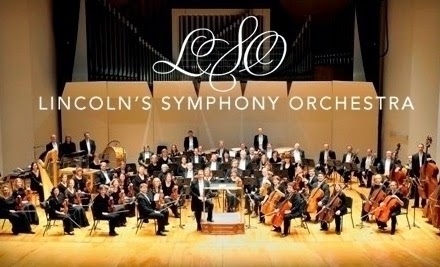
During his run, the choir performed three or more concerts a year and collaborated with such groups as Lincoln’s Symphony Orchestra, TADA, Omaha Symphony and the Military Band of the Heartland. Its holiday concert has become a popular Lincoln pastime, with the choir often featuring youth ensembles at it -- another source of pride to Wyman.


In 1992, the Lincoln Civic Choir, presented the area premiere of Ron Nelson's "Te Deum Laudamus" with the Military Band of the Heartland along with one of the first performances of Omaha composer Randall Stroope's "Hodie" with the Plymouth Brass. In the spring of 1995, the choir appeared in Avery Fisher Hall at Lincoln Center in New York City along with the NWU Choir, the choirs of the four Lincoln public high schools and New York's Westside Orchestra. We also performed the piece in Lincoln with the Lincoln Symphony. In May, 1997, the choir performed with the Military Band of the Heartland in a concert featuring the music of Howard Hansen.
LCC regularly joined the Nebraska Wesleyan University Choir and Lincoln's Symphony Orchestra in concerts at the Lied Center and other performance venues. Recent performances of this type have included Rachmaninoff's "Vespers," Orff's "Carmina Burana" and Mozart's "Grand Mass in C Minor." In March, 2006, the choir made its first guest appearance with the Omaha Symphony Orchestra.
I am so proud to have opportunity to build on this history in our upcoming concert. We will really stretch the listener's ear with music from around the world that reminds us of the joy of coming together in music and fellowship.

Monday, October 6, 2014

Communal Song: Shape-note singing and Americana, Traditions in the US

So I have obviously made all of you very curious to read this blog with such an ostentatious title (heavy sarcasm!) Congrats if you are still reading. I am always leery about using the colon in my title. It can seem pretentious and obnoxious

Today I am mostly concerned about why we sing. Last we I talked about the importance of the communal act of singing. Today I want to talk a little about the history of why we have choirs, particularly in the US, and why the traditions still have a place in society.

Robert Morgan says that 2 main factors created the choral tradition in America: a scarcity of instruments in the colonial years and the heavy role of religious life, especially in Puritan traditions.
Puritans actual forbade instruments in worship. So community singing, choirs, became a natural form of musical expression in worship. It wasn't anything new. Most of western music history traces it's way through the Christian church with  the largest portion of music based in choral writing and congregational singing. 
 A major difference in the American tradition is that for the first part of our history, colonial days to the early 19th century, the music was actually divorced from and developed independently from the European Schools. No where is this more evident than in the music of Shape-Note singing, 

On the fall LCA concert "We Gather" we are singing a song based in that tradition, Big Sky. Though the text and tune are newly composed, the essence and stylistic intent of the composer clearly reflects the Shape-Note style. Here is an example of a traditional shape note score and a video of a performance.
The basic tonal color, as you can hear, is very bright and forward. There is basically one volume, LOUD! The director changes with each song sung. The choir, or really communal gathering, of Shape-note conference singers, sit in a square with each section, SATB, facing the center. This is Holy music, and the tradition lives on to this day with Sacred Harp conferences all over the country.

Another selection from the fall concert includes: "How Can I Keep From Singing?" (also known by its first line of text "My Life Flows On in Endless Song"), a Christian hymn with music written by American Baptist minister Robert Wadsworth Lowry. The song is frequently, though erroneously, cited as a traditional Quaker hymn. 

Pete Seeger learned a version of this song from Doris Plenn, a family friend, who learned it from her North Carolina family. His version made this song fairly well known in the folk revival of the 1960s. Seeger's version omits or modifies much of the Christian wording of the original. A reference in the added verse intended by Seeger and by Plenn—both active in left-wing causes—is to 'witch hunts' of the House Un-American Activities Committee (Seeger himself was sentenced to a year in jail in 1955 as a result of his testimony before the Committee, which he did not serve due to a technicality). Most folk singers, including Enya, have followed Seeger's version.
In the late 1970s and early 80s, How Can I Keep From Singing was recorded by Catholic Folk musician Ed Gutfreund (on an album called "From An Indirect Love"), and the music was published in a widely used Catholic Hymnal called "Glory and Praise", and was popular among Catholic liturgical music ministers, especially those who used guitar. In this, and in an 1993 recording by Marty Haugen, Jeanne Cotter, and David Haas, the quatrain beginning: "No storm can shake my inmost calm ..." is used as a repeated refrain.
It is also sung by Dahlia Malloy (Minnie Driver) in the episode 'Virgin Territory' from Season One of FX's The Riches.
In his radio singing debut, actor Martin Sheen performed this song (using the Plenn–Seeger lyrics) on A Prairie Home Companion in September 2007. 

So what do we get out of this? First of all a great choral music heritage that grew from some of these songs' traditions and the development of choral organizations in the colleges and civic organizations. Second, a sense of connection with our past, heritage, and the spirit of music. Finally, a realization, I hope, that choral music embodies a part of the human spirit that is only possible when a group of people come together to make music with their voices. It is a completely unique, yet very common and communal, endeavor. And I hope that the Lincoln Choral artists convey our sense of these traditions, while still moving forward, and offer our audience a great "in the moment" experience of being in community.